
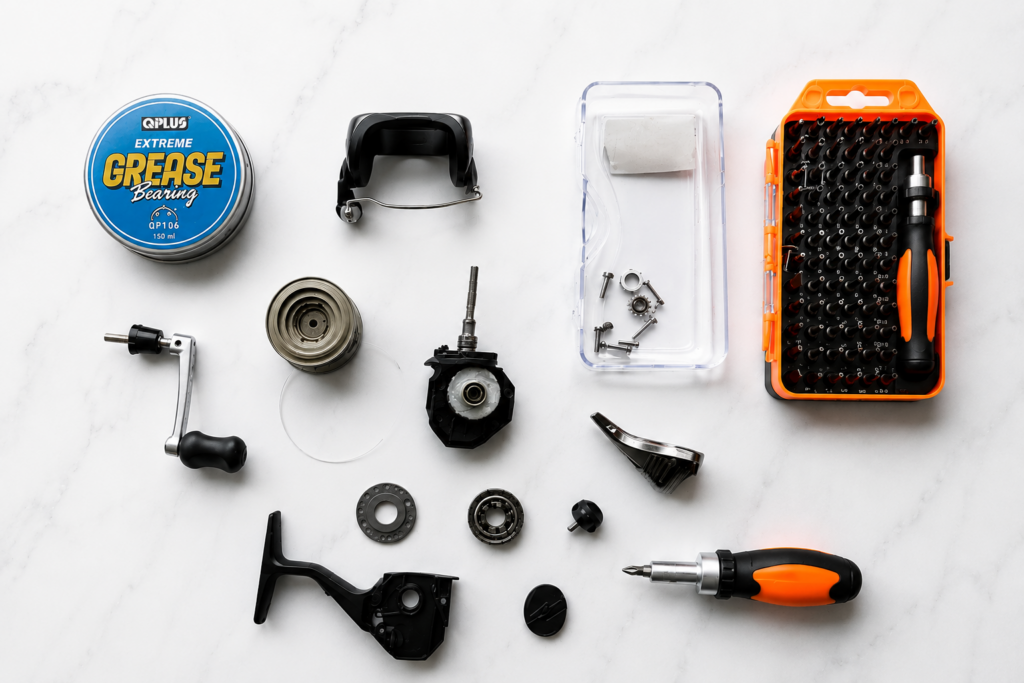
Fishing reel maintenance is one of the most important habits every angler should develop, whether you’re casting every weekend or competing in fishing tournaments. A well-maintained fishing reel delivers smoother retrieves, longer casting distance, better drag performance, and significantly extends the lifespan of expensive reel components.
Unfortunately, many anglers only service their reels after problems appear — when bearings become noisy, the handle feels rough, or corrosion has already damaged internal parts.
This guide, however, covers everything you need to know about how to maintain a fishing reel, including cleaning, lubrication, bearing care, and why choosing the right grease makes all the difference.
Why Fishing Reel Maintenance Matters
A fishing reel contains dozens of precision-machined components working together under constant pressure. Every fishing trip, however, exposes your reel to a range of harsh elements, including:
- Saltwater
- Freshwater
- Sand
- Dust
- Mud
- Fish slime
- Humidity
- UV exposure
As a result, without regular maintenance, these contaminants can cause:
- Bearing corrosion
- Increased friction
- Gear wear
- Reduced casting distance
- Rough handle rotation
- Drag inconsistency
- Expensive repairs
Ultimately, routine maintenance keeps every moving part operating at peak efficiency.
How Often Should You Service Your Fishing Reel?
Maintenance frequency depends on how often and where you fish.
| Usage | Maintenance Schedule |
|---|---|
| Freshwater (casual) | Every 3–6 months |
| Freshwater (frequent) | Every 1–2 months |
| Saltwater | Clean after every trip |
| Heavy anglers | Monthly inspection |
| Tournament anglers | Before every competition |
If you fish in saltwater, rinsing and drying your reel after every outing is essential.
Signs Your Reel Needs Maintenance
Watch for these warning signs:
- Rough handle rotation
- Grinding sound
- Noisy bearings
- Reduced casting distance
- Sticky line roller
- Drag feels inconsistent
- Excessive resistance
- Visible rust
- Water inside reel
- Grease turning dark
Ignoring these symptoms may result in permanent bearing or gear damage.
Essential Fishing Reel Maintenance Tools
A proper reel maintenance kit should include:
- Precision screwdriver set
- Tweezers
- Cotton swabs
- Microfiber cloth
- Bearing cleaner
- Soft brush
- Cleaning tray
- Parts organizer
- Reel oil
- High-performance bearing grease
Choosing the Right Bearing Grease
One of the biggest mistakes anglers make is using ordinary automotive grease or generic lubricants inside fishing reels.
Fishing reel bearings require a lubricant that offers:
- Low friction
- Excellent water resistance
- Rust prevention
- High pressure protection
- Long service life
- Stable performance under heat
This is where QPlus QP106 Extreme Grease Bearing stands out.
Why Use QPlus QP106 Extreme Grease Bearing?
QPlus QP106 Extreme Grease Bearing is a 100% fully synthetic bearing grease specially formulated for fishing reel bearings.
Unlike ordinary grease, it is engineered specifically for precision reel components that require smooth movement while remaining protected from moisture and corrosion.
Key Features
100% Fully Synthetic Formula
- Provides superior lubrication that lasts much longer than conventional grease.
Excellent Corrosion Protection
- Helps protect bearings against rust caused by freshwater, saltwater, and humid environments.
Metal Conditioner Technology
- Creates a protective film that reduces metal-to-metal contact and minimizes wear.
High Load Protection
- Maintains lubrication even under heavy cranking pressure and large fish fights.
Heat Resistant
- Maintains consistency without breaking down during extended use.
Smooth Bearing Performance
- Reduces friction, resulting in smoother retrieves and quieter reel operation.
Long Service Life
- Less frequent re-greasing means lower maintenance costs and better long-term performance.
Step-by-Step Fishing Reel Maintenance
Step 1: Prepare a Clean Workspace
First, use a white towel or maintenance mat to prevent losing small screws and springs. Additionally, organize all parts carefully during disassembly so nothing gets misplaced.
Step 2: Disassemble the Reel
Next, remove the following components:
- Handle
- Side plate
- Spool
- Rotor
- Bearing assemblies
To make reassembly easier, be sure to take photos during each step.
Step 3: Clean Every Component
Once disassembled, use a reel cleaner or degreaser to remove:
- Old grease
- Dirt
- Salt deposits
- Sand
- Oil residue
Afterward, allow every component to dry completely before moving on to lubrication.
Step 4: Inspect Bearings
Then, spin each bearing using your fingers to check for issues. If you notice any of the following, replace the bearing:
- Grinding
- Roughness
- Rust
- Excessive play
- Noise
Otherwise, healthy bearings should rotate smoothly with no resistance.
Step 5: Apply QPlus QP106 Extreme Grease Bearing
At this stage, use a small applicator or brush to:
- Apply a thin layer to reel bearings
- Lubricate bearing races evenly
- Avoid over-packing bearings
Keep in mind that more grease does not mean better lubrication — instead, a thin, even coating provides optimal performance.
Step 6: Reassemble Carefully
Finally, reinstall components in reverse order. Before considering the job done, check the following:
- Handle rotation
- Drag function
- Bail arm
- Line roller
- Anti-reverse
Overall, everything should operate smoothly without unusual resistance.
Common Fishing Reel Maintenance Mistakes
Avoid these common errors when maintaining your reel:
- Using automotive grease instead of a reel-specific formula
- Applying excessive grease to the bearings
- Forgetting to clean out old lubricant before re-greasing
- Mixing different grease types together
- Skipping saltwater cleaning after trips
- Over-tightening screws during reassembly
- Ignoring noisy or gritty bearings
In short, most of these mistakes come down to using the wrong product or skipping a step — both of which are easy to avoid with the right routine and the right grease.
Freshwater vs Saltwater Reel Maintenance
Freshwater
- Lower corrosion risk
- Light cleaning after trips
- Grease every few months
Saltwater
- Rinse gently with fresh water
- Dry completely
- Re-grease more frequently
- Inspect bearings after every trip
Saltwater is by far the most aggressive threat to reel components, which is why understanding saltwater corrosion research can help anglers appreciate why rinsing and drying is non-negotiable after every trip.
Pro Tips for Longer Reel Life
Professional anglers recommend:
- Store reels in a dry environment.
- Loosen the drag before storage.
- Never store reels while wet.
- Clean your reel after every fishing trip.
- Service bearings before peak fishing season.
- Use premium synthetic bearing grease.
- Replace damaged seals promptly.
Frequently Asked Questions
What is the best grease for fishing reel bearings?
A fully synthetic bearing grease formulated specifically for fishing reels offers the best protection against corrosion, friction, and heavy loads. For this reason, QPlus QP106 Extreme Grease Bearing is built for these demanding conditions, whether you’re fishing freshwater lakes or battling saltwater corrosion offshore.
How often should I grease my reel bearings?
Freshwater anglers should grease bearings every 3–6 months, depending on how often they fish. Saltwater anglers, however, should inspect bearings after every single trip, since saltwater accelerates corrosion far more aggressively than freshwater does.
Can I use automotive grease?
No — automotive grease is generally too thick for precision fishing reel bearings, and it can noticeably reduce casting performance. Instead, choose a lubricant engineered specifically for reel bearings, like QPlus QP106.
Can too much grease damage my reel?
Yes. Over-greasing increases resistance, attracts dirt, and reduces bearing efficiency over time. To avoid this, always apply a thin, even layer rather than packing the bearing full.
Why Anglers Choose QPlus QP106 Extreme Grease Bearing
Fishing reels are precision equipment, and their performance depends heavily on proper lubrication. Investing in a purpose-built synthetic bearing grease helps reduce friction, prevent corrosion, and extend the life of critical reel components.
QPlus QP106 Extreme Grease Bearing is formulated specifically for anglers who want smoother operation, reliable protection, and long-lasting performance in both freshwater and saltwater conditions.
If you’re serious about protecting your fishing reel, regular maintenance combined with the right bearing grease is one of the smartest investments you can make.

